1. Carat weight
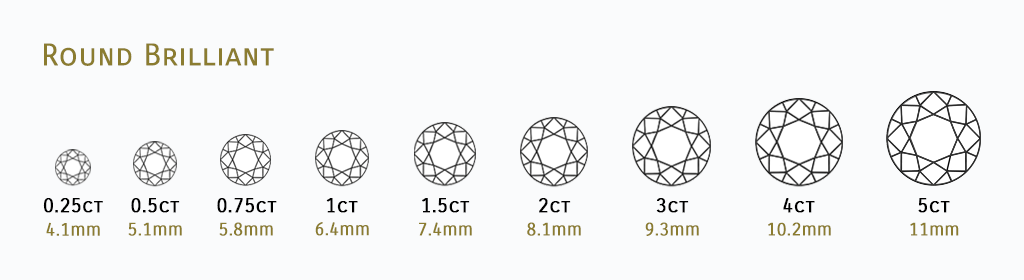
Carat weight measures a diamond’s mass. One carat = 200 milligrams (.2 grams).
The term “carat” comes from the carob seed, historically used as a counterweight
today, precise electronic balances determine carat to two decimal places and often to hundredths or thousandths for trade and certification.
Carat should be chosen in harmony with cut, colour and clarity. A larger carat with poor cut will look dull; a smaller, superbly cut diamond may appear more brilliant.
At Legacy Diamond Co., we guide clients to the optimal balance of carat, cut, colour and clarity so the diamond fulfils both visual expectations and long-term value.
The 4 four C’S of diamonds
How to determine the quality of a diamond
2. Colour
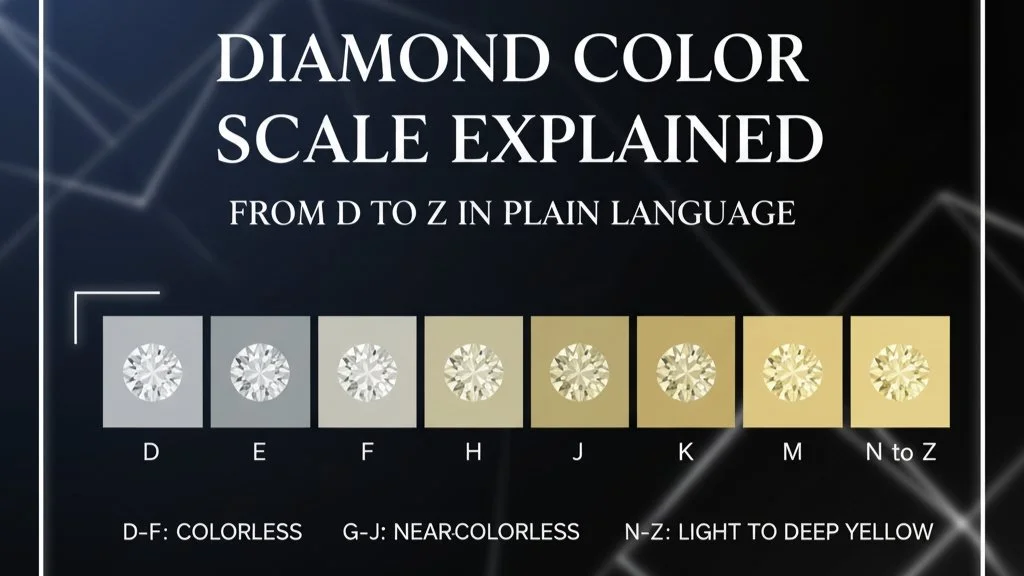
Diamond colour refers to the presence or absence of yellow or brown tint in a white (colourless) diamond. The most valuable diamonds are those closest to colourless; the less colour present, the rarer and more sought-after the stone.
The GIA colour scale (most commonly used)
D–F: Colourless — No detectable colour to the unaided eye. D is completely colourless and the highest grade
G–J: Near Colourless — Minor traces of colour may be detected by a trained gemmologist, but appear colourless in most settings to the average viewer.
K–M: Faint — A noticeable warm tint is visible to the eye, especially in larger stones or in certain settings.
N–R: Very Light — A distinct yellow or brown tint; less desirable for those seeking a classic white look.
S–Z: Light — Stronger colouration; often chosen for budget reasons or when a warm tone is desired.
Cut describes how a diamond’s facets interact with light. It’s the most important factor in a diamond’s visual performance—more so than carat
weight or even colour—because an excellent cut maximizes brilliance (white light return), fire (coloured light dispersion) and scintillation (sparkle and contrast).
Key aspects of cut
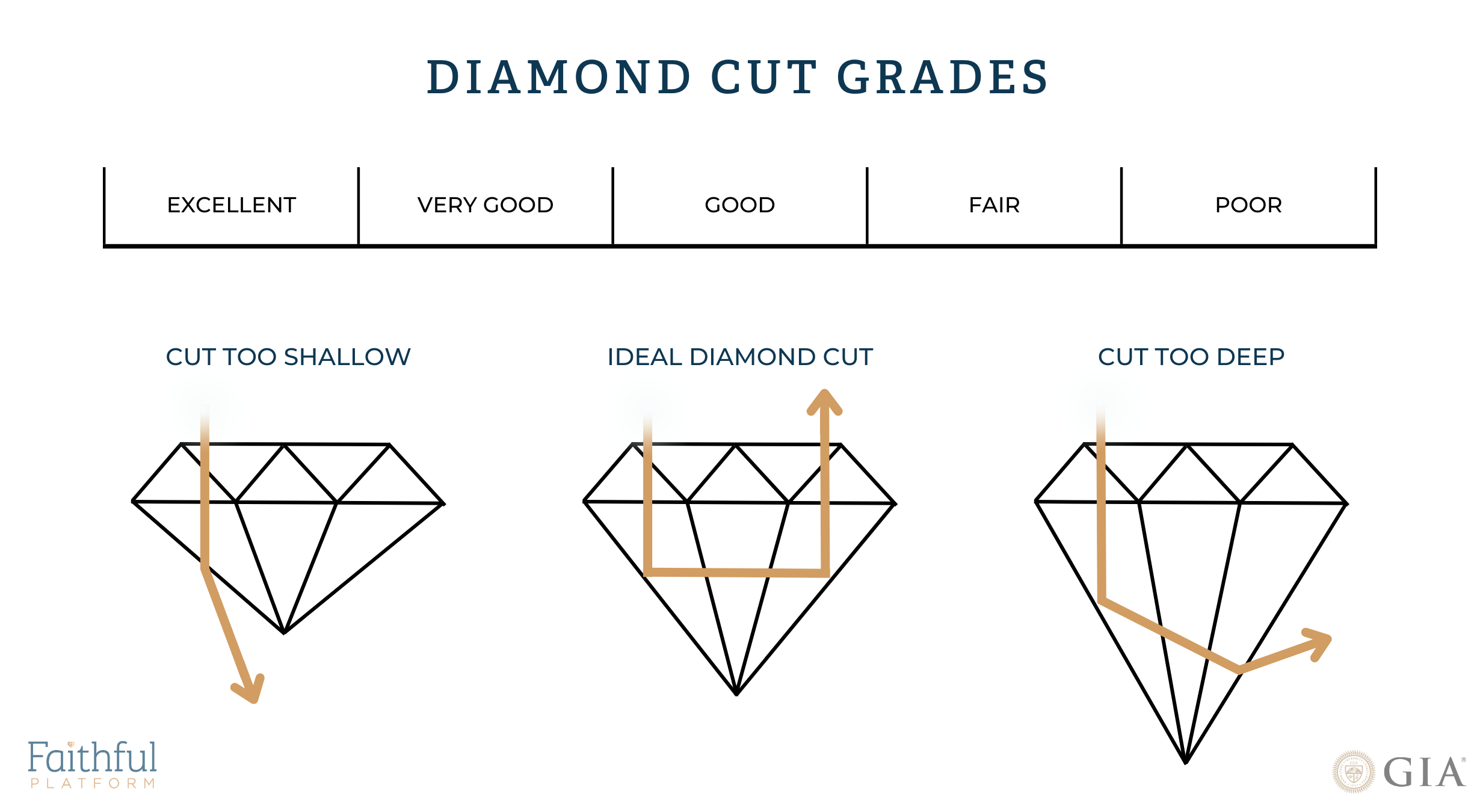
Proportions: The relationships between the crown, pavilion, table and girdle. Ideal proportions balance light return and dispersion. Shallow or deep proportions can cause light to leak out the sides or bottom, reducing brilliance.
Symmetry: The precision with which facets are aligned and matched. Better symmetry produces cleaner light patterns and stronger sparkle.
Polish: The smoothness of facet surfaces. High-quality polish ensures minimal light scattering from surface imperfections.
Facet pattern: The number, shape and arrangement of facets influence the character of sparkle. Traditional round brilliants use 57–58 facets; fancy shapes (princess, emerald, cushion, etc.) have distinctive patterns and light behaviour.
Cut grade: Certified diamonds are often given a cut grade (Excellent, Very Good, Good, Fair, Poor) that summarizes how well the stone is cut relative to ideal standards. For rounds, lab standards are well established; for fancy shapes, cut grading is less standardized and demands more visual assessment.
3. Cut
4. Clarity
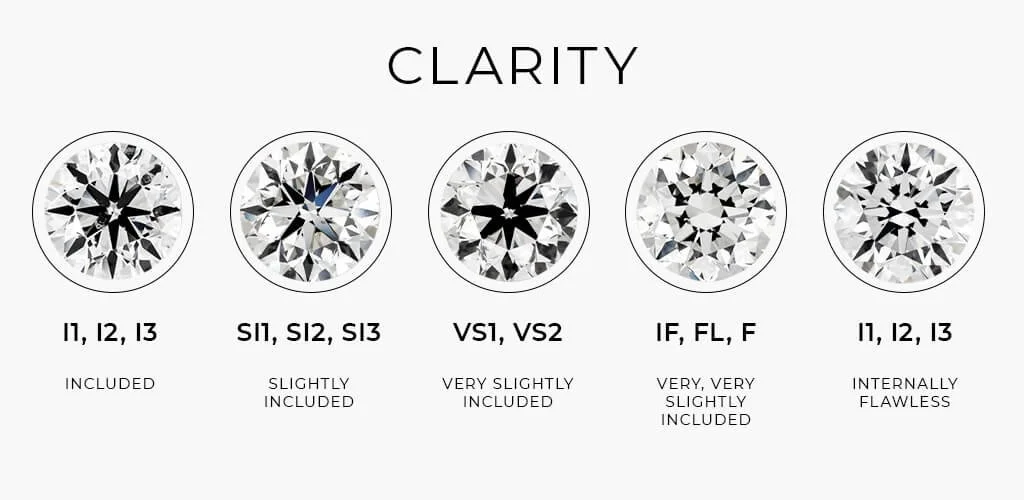
Diamond clarity refers to the presence—or absence—of internal characteristics (inclusions) and external characteristics (blemishes) within a diamond. Clarity is one of the “Four Cs” of diamond grading and significantly influences both beauty and value.
How clarity is assessed
Magnification: Clarity is graded by a trained gemmologist using 10× magnification, evaluating the number, size, position, nature and relief of inclusions and blemishes.
Impact on appearance: Some inclusions are invisible to the naked eye and do not affect a diamond’s brilliance; others may be visible and can influence light performance or structural integrity.
The clarity scale (GIA standard)
Flawless (FL): No inclusions or blemishes visible under 10× magnification. Extremely rare and highly valuable.
Internally Flawless (IF): No internal inclusions under 10× magnification; may have minor surface blemishes.
Very, Very Slightly Included (VVS1 and VVS2): Minute inclusions that are extremely difficult to see under 10× magnification.
Very Slightly Included (VS1 and VS2): Minor inclusions that range from difficult to somewhat easy to see under 10× magnification, usually invisible to the unaided eye.
Slightly Included (SI1 and SI2): Noticeable inclusions under 10× magnification; some SI1 diamonds may be eye-clean, while SI2 inclusions are more likely to be visible without magnification.
Included (I1, I2 and I3): Inclusions are obvious under 10× magnification and often visible to the naked eye; may affect durability and brilliance.